Monday, April 08, 2013

Exxon Threatens Reporters

credit: Michael Hibblen/KUAR
Mother Jones reports Exxon-Mobil is threatened reporters covering the Mayflower, Arkansas Pegasus pipeline spill. The spill has contaminated nearby Lake Conway with dilbit, the same diluted bitumen that would flow in the Keystone XL pipeline in much greater amounts if B. O'Drama approves it. Evacuees from the contaminated North Woods subdivision are being housed in local hotels at Exxon's expense for an unknown length of time. They are allowed brief home visits as clean up crews remove cubic yards of contaminated soil, and prepare to remove the ruptured section of pipeline.[photo] The rupture occurred on March 29th.

A reporter from InsideClimateNews.org attempted to reach EPA officials working in a command center on the scene. Unfortunately for the reporter, the command center is located on Exxon property and when she reached it on Friday an Exxon spokesperson told the reporter to leave. She was told by another Exxon employee that if she did not leave she would be arrested for criminal trespass. Lisa Song also reported that Exxon-Mobil was controlling information about the spill and that federal agencies are nearly invisible at the spill site despite reassurances from the White House press agent. Calculations about the amount spilled are being treated as proprietary information by the company since potential fines and damages will be based on the amount of spilled oil in the environment. The EPA estimates the volume now at 84,000 gallons of Wabasca heavy crude, a type of diluted bitumen from Canada's oil sands region.

Other reporters covering the story have also experienced hostile responses from the company. A radio station reporter and other reporters accompanying the state's Attorney General inspecting the site on Wednesday were threatened with arrest by sheriff's deputies if they did not leave immediately. The deputies told the reporters that "Exxon Media" did not want them there. Apparently these threats did not go down well with the press because Exxon-Mobil allowed reporters to visit the site of the rupture on Sunday. The FAA has imposed a no fly zone over the site.

Sunday, April 07, 2013

Weekend Edition: Fast Cars that Don't Pollute

Like fast cars? Like to turn heads as you cruise down Main? Are you a dinosaur from the days before Viagra? If you answered yes to any of these questions, US Person has a car for you, and it is made in the USofA! Detroit Electric unveiled its new all-electric sports car, the SP:01 [photo courtesy Detroit Electric] Housed in the historic Fisher Building in downtown Detroit, Detroit Electric said on Wednesday that its new, exclusive, zero emissions sports car has a top speed of 155mph, will accelerate to 60 mph in 3.7 seconds and has a range on one charge of about 190 miles. Those are figures to impress any petrol-head! The SP:01 (a name that does not match the car's aerodynamic looks) is the world's fastest all-electric car, weighing just 2,354 lbs because it is handmade of carbon fiber and carries a lightweight battery pack. The SP:01 also uses energy recovery by converting kinetic energy from braking into battery charge. The car shows the influence of Lotus, the English carmaker, well known for its lightweight, bare-bones two seaters. Detroit Electric was revived by Albert Lam, former CEO of Lotus Engineering Group, in 2008. Detroit Electric is no stranger to electric cars. When the electric vehicle industry was flourishing in Detroit early in the last century, Detroit Electric was a big player, setting a record for selling more electric vehicles than any other company in the 20th centrury. Even Clara Ford, wife of Henry, was a Detroit Electric customer. The company plans a limited run of the $135,000 sports car before turning out more practical but still performing electric sedans as part of the re-imagining of Detroit's nearly defunct auto industry.

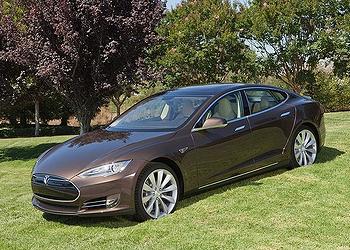
Still on the subject of electric cars, Tesla's Model S was named "World Green Car of 2013" chosen by an international jury of 66 motoring journalists at the New York International Auto Show. The Model S was chosen from 21 new vehicles and won against two other finalists, the Renault Zoe and the Volvo V60 plug-in hybrid. The finalists were scrutinized by five experts specializing in the new electric vehicle technologies. According to the jurists, only two pure electric cars with sensible range have been created by the world auto industry, and both of those by Tesla, a successful start-up company.[photo credit: jujutavu] The S has superior range, seats up to seven and is fast as well, but that high technology does not come cheap. The S and other electric vehicles will have to compete with improved, lightweight, cleaner internal combustion engines and electric hybrids that some auto industry experts think will be the dominant trend in years to come. US Person joins Clara Ford in thinking electric cars are a cleaner idea, if you can afford one.

Saturday, April 06, 2013

BP Trial Update V

Judge Barbier granted Cameron International's motion to dismiss claims against it in the first phase of British Petroleum's civil trial for the Deepwater Horizon disaster. The judge stated he had not heard or seen any evidence presented that implicated the manufacturer of the blowout preventer used on the Macondo well with negligence, or that showed the blowout preventer was defective in any way. Rather, the apparent failure of the preventer to close off the Macondo well once it began gushing oil and gas implicates Cameron's sophisticated customers, BP and its rig contractor Transocean, according to the judge. These companies selected the preventer, its components, and installed them. Cameron's lawyer immediately asked Judge Barbier if he could go home once the motion to dismiss was granted from the bench, apparently greatly relieved his company would not be facing potentially four-fold punitive damages. Schlumberger's subsidiary which supplied drilling mud was dismissed from the case earlier.

Halliburton, the well services company that poured the cement well lining, is still facing liability, and presented testimony from a drilling and well manager for a Norwegian company, Statoil. Under cross examination, he discussed ten steps BP took on the Macondo operation and concluded that, "in each event, the decision that was made did result in a time and cost savings." The government's liability theory has consistently been BP took unreasonable risks by deliberately ignoring safety protocols in an effort to save money on a well that was behind schedule and over budget. According to the government's case the company's ingrained culture of profit before safety amounted to gross negligence in the Macondo operation causing the largest accidental oil spill in history. BP will begin presenting its defense next week after seven weeks of trial. It will attempt to focus some of the blame for the disaster on its two remaining contractors, Halliburton and Transocean, to avoid being assessed punitive damages under the Clean Water Act for its mismanagement of operations as well owner. Halliburton personnel mixed and poured the cement that failed to seal the well, and Transocean drillers botched a negative well pressure test that showed the well was not properly sealed. Both processes were supervised by BP employees on board the Deepwater Horizon drilling platform that was completely consumed by the ensuing fire.

Friday, April 05, 2013

'Toontime: Nuke' Em Dano!

[credit: John Deering, Arkansas Democrat Gazette]
The Son of Il known as Un is doing it Pongyang style because B.O'Drone refuses to engage him, much as would a parent ignore an unruly child begging for attention. There was an opportunity awhile ago when his father was running the country to end the sixty-year-old military stalemate on the Korean Peninsula, but the US administration did not cut a deal choosing instead to point fingers at North Korea's nuclear weapons program. Hopefully, all we will witness this time around is another puny missile test. China has got to be getting tired of its disruptive client. According to a top State Department official, China is taking a tougher stand with the hermit nation. China recently refused to send a diplomatic envoy to Pongyang, a sign of displeasure over the latest belligerent rhetoric coming from North Korea, and a development reported in the South Korean press.. Since they established diplomatic ties in 1949 the two communist countries have exchanged high level envoys once or twice a year. US Person thinks China should help restart the six party talks with the goal of signing an agreement to end the sixty-year-old war before somebody gets hurt:

[credit: Pedro Molina]

Thursday, April 04, 2013

State Department Paper Hanger Approved Peruvian Pipe

Camisea pipe slashes through forest
The State Department hired a consulting firm hand picked by TransCanada to perform the required paper hanging known as a Supplemental Environmental Impact Statement for the Keystone XL project. As readers of PNG know, that SEIS was a no-brainer for Environmental Resource Management, a group that also concluded a disastrous liquified natural gas project in Peru would have no substantial environmental impact. The Camisea II project involved a 253 mile long, 34 inch pipeline carrying liquified natural gas from the Camisea field, through the Amazon rainforest, and over the Andes to Peru's Pacific coast. The LNG is mostly exported to Mexico and the US.

The main Camisea pipeline is described by Amazon Watch as the most damaging project in the Amazon Basin, causing clear cutting of forest, major spills and displacement of native people. ERM performed the environmental assessment for an arm of the World Bank which finances development projects in what was once termed 'the third world'. The review it conducted lasted from September 2006 until January 2008 and was allegedly developed using "industry best practices". Camisea I was itself a disaster built with corroded pipe left over from Brazilian and Ecuadorian projects and welded together by untrained workers. It exploded five times in the first 15 months of existence. The spills polluted forest, killed hundreds of fish, and burned hundreds of acres of rainforest and cropland. The approximately 10,000 people living near the developement are also suffering social degradation. Camisea development has brought more river and air traffic to the remote lower Urubamba region which scares away game indigenous people hunt. Their water and food supplies are contaminated. Infectious diseases including syphilis have increased. The review conducted by ERM for Camisea II did not even mention the exploding pipeline to which it and LNG terminal would be connected. So much for pipeline co-owner Ray Hunt's boast that Camisea development will " benefit every citizen of this great country and help establish the Republic of Peru as a stable and responsible leader..." Hunt helped bribe the government to change the country's hydrocarbon law restricting exports based on domestic needs. Fifty-four million acres of the world's largest terrestrial carbon sink have been targeted for fossil fuel development by Peru.

ERM group is described as a key node in the worldwide "carbon web", a network of business relationships between oil and gas companies, banks, and the government agencies supposedly regulating them. The consulting firm's modus operandi is to use the "tobacco tactic": coordinated propaganda campaigns employing faux science to transform one-sided propositions into a farcical dispute between two sides. Enter the US State Department into the web of maintaining carbon dependency. ERM is under contract with pipeline builder TransCanada. Other clients of ERM include Koch Industries, Conoco-Phillips, and British Petroleum. In fact ERM's second in command has worked on three previous pipeline projects for TransCanada as an outside consultant.ERM had to certify to State it was not operating under any conflicts of interest before being hired to perform the Keystone SEIS. When Mother Jones unearthed ERM's profitable connections to big oil, State responded by redacting the curriculum vitae of ERM officers.

B. O'Drama is unfazed by business as usual in the hydrocarbon swamp of Washington, DC. Nor is he paying attention to the "urgent clock" of fossil fueled climate change that Senator Kerry talked about six years ago at the Council on Foreign Relations. He implied to rich supporters at the home of a San Francisco fundraiser that the Keystone Pipeline (XL for extended line, not extra large) will go ahead because "the politics of this [project] are tough", and "earth's temperature probably isn't the number one concern for workers..." Absolute hogwash from a southside Chicago huckster who presents the same false choice between the economy and the environment as the proponents of the project. Ask the evacuees of Mayflower, AK if their priorities are being served by yet another spill of corrosive, acidic, toxic and potentially flammable dilbit* [video]. Leadership is a lot about taking policy stands that are widely unpopular, but later prove to be beneficial for everyone on the planet.

*dilbitis more acidic, thick, and sulfuric than conventional crude oil; is up to seventry times more viscous than concentional crudes; contains fifteen to twenty times higher acid concentrations than conventional crudes and five to ten times as much sulfur as conventional crudes, and the additional sulfur can lead to the weakening or embrittlement of pipelines. Expert Anthony Swift's testimony to House Energy and Commerce subcommittee.

Colony Collapse Disorder Gets Worse

wild honey bee hive, Vacaville, CA: Garvey
The strange syndrome that is killing bees appears to be getting worse, and is causing farmers who rely on their pollination activity alarm. The sickness has been attributed to a number of individual causes ranging from fungi and parasites to neonicotinoids a class of commonly used pesticides. Europe is debating banning these systemic chemicals, but that action is opposed by the pesticide manufacturers and their political supporters. No action has yet been taken in the US against the use of neonicotinoids. Yet commercial beekeepers say the disease has drastically expanded this year, wiping out up to 50% of colonies needed to pollinate the nation's fruit and vegetable crops. The US Agricultural Department bee research laboratory is due to issue an assessment in May, but a USDA researcher told the New York Times the bee death rate has been "much more than it's ever been". The rising use of neonicotinoids has roughly tracked the rising bee mortality rate. The key difference between neonicotinoids and older types of pesticides is that neonicotinoids persist in the environment and are embedded in the entire plant including seeds and pollen. Bees are therefore chronically exposed to these chemicals and others such as herbicides and fungicides. A researcher at UC Davis has identified 150 chemical residues in pollen and wax gathered from beehives. Weakened bees cannot survive the winter and the winter of 2012-13 was bad for bees due to a shortage of nectar.  Transportation to far distant fields also further stresses weakened colonies.

Beekeepers transport their commercial bee workers to the groves and fields of California and other sunbelt agricultural areas in the spring. In the San Joaquin Valley 1.6 million hives were recently used to pollinate the vast almond crop. But apiarists suffered devastating bee loses. One Montana beekeeper lost 10,000 hives, and the nations largest apiary in South Dakota lost 55% of its colonies. Normally loses were around 5% to 10%. When the disease was first identified in 2005, losses increased to around a third. Now a new level of destruction appears to have been reached. Of course the destruction of pollinators means smaller harvests that will increase the cost of food. Around a quarter of the American diet depends on pollination by honey bees. Some beekeepers are taking a pass on shipping their insect workers to the Californian groves to avoid possible contamination, but farmers there are desperate to rent bees to pollinate their nuts, fruits and vegetables, paying up to $200 per hive or a 20% premium. Its not the sky falling, it's the bees, Mr Adee.

Tuesday, April 02, 2013

Omens of Keystone

credit: CheneyWatch
As if in symbolic celebration of the non-binding Senate vote in favor of the new Keystone XL pipeline, two spills of Canadian heavy crude occurred in the United States last week. On Friday an Exxon-Mobil pipeline ruptured, leaking 10,000 barrels into an Arkansas town.  Twenty-two homes in Mayflower, AK were evacuated.[photo] Exxon shut the Pegasus pipeline capable of carrying 90,000 bpd from Pakota Illinois to Nederland, Texas. Keystone, if built, would carry nine times that amount per day at operational capacity. The EPA rated the spill a major one. (>250 US barrels or 10,500 USgals)

On Wednesday a train carrying tar sands crude spilled 30,000 gallons in Minnesota. The train was a 94 car Canadian-Pacific mixed freight about a mile long. A spokesman for Minnesota Pollution Control said three tank cars ruptured when the train derailed near Parkers Prairie, MN. Transportation by rail of Canadian crude is booming as production from the vast Alberta bitumen deposits outstrips available pipeline capacity. Rail shipments of petroleum in the US rose more than 46% last year. Some experts argue that pipeline transportation is safer, but others note rail car spills are rare and offer the possibility of expanding refinery production to areas not connected to markets by pipelines.

Diluted bitumen ("dilbit") has a high specific gravity making it more difficult to clean up than conventional crude oil. US EPA is still badgering Canadian company Enbridge to clean up the 2010 Kalamazoo River spill in Michigan. Heavy rains washed the spill 35 miles downriver before it was contained. EPA wants Enbridge to dredge parts of the river above Ceresco dam to keep submerged dilbit from migrating out of recovery range. Enbridge owns the Alberta Clipper pipeline dedicated to bitumen transport that crosses the border in North Dakota and runs to Wisconsin. TransCanada owns Keystone pipeline, another one transporting bitumen, which terminates in Oklahoma. The company is already building a southern extension to the Gulf Coast. Not coincidentally, there is a loophole in the US tax code that allows oil companies to forgo paying into the spill cleanup fund when importing Canadian bitumen. Congressman Ed Markey (D-MA) has introduced legislation to close that escape route. Also last week Exxon was fined a paltry $1.7 million for the pipeline rupture that spoiled the pristine Yellowstone River in 2011 with 42,000 gallons of the toxic sludge. The CEO of Exxon probably keeps that amount of money in his desk drawer.