Wednesday, September 22, 2021

New COVID-19 Treatment from Llamas

COVID-19 is beginning to show up in animals that have close contact with humans such as pets and zoo captives.  Llamas are also susceptible to the disease.  Researchers at Reading University, UK have developed a treatment made of nanobodies, a smaller, less complex version of antibodies that camelids produce naturally.  In early trials, a therapy derived from a llama named Fifi [photo credit: Reading University] has shown great promise. Once this therapy has been tested in humans, it could be administered in a simple nasal spray.

Rodents infected with SARS-CoV-2 treated with the new nanobody  therapy recover fully within six days.  The apparent potency of the treatment is due to the affinity of the nanobodies for chemically bonding with the virus.  Researchers stimulated Fifi's immune system with non-infectious parts of the viral protein to produce the specific nanobodies for which they were searching.  Through an alembic process they were able to isolate those antibodies that matched the viral protein most closely.  The strongest "key in the lock" is processed into a spray application. Dr. Naismith lead researcher at Franklin Institute in Oxfordshire told BBC that,"The immune system is so marvellous that it still does better than we can--evolution is hard to beat." You do say doctor? The research is published in Nature Communications

Monday, September 20, 2021

Not Your Average Bear


As humans push ever further into remaining wilderness, contact with grizzly bear, Arctos ursus horribilis is becoming problematical. As its latin nomenclature impies grizzlys are nothing like your childhood stuffed toy. They are ravenous eaters, territorial and equipped to kill with one swipe of their huge paws. Fortunately confronting a hungry bear that stands over seven foot on its hind legs is less likely than being hit by lightening. [photo credit: Getty Images] We want bears to survive into the future, so we must give them room to roam and learn to coexist peacefully. Tragic incidents do occur as in the tiny rural hamlet of Ovando, MT when a sixty-five year old woman was mauled to death in her tent in July. Her attacker, a male bear looking for food, was tracked down and killed. The last time a bear was killed near Ovando was two decades ago. 

The number of people wanting a slice mountain paradise or visiting parks is growing. The human population of western Montana, a grizzly stronghold, has increase by one-third over the past decade. Gizzlies once numbered 50,000 strong from Alaska to central Mexico. Habitat loss and two centuries of conflict with humans have decimated to the species in the lower forty-eight states to the point thay are listed as "threatened" under the federal Endangered Species Act since 1975. After a recent review of status by the Fish & Wildlife Service, the bears have retained their protected status. A slow, but steady increase in bear population has occurred. Grizzlies are considered recovered in the Yellowstone and Northern Continental Divide ecosystems, but they are assessed as a single population throughout he contiguous US.

Removing a species that occupy only 3% of its historic range would condemn them to genetic isolation and eventual extinction. Ceeding domination of some wilderness to the gerat bear is necessary, but conservative politicians in western range states have reacted negatively to expanding zones of protection for the bear. Montana Governor Greg Gianforte, a Republican, has been given two bills for his signature– one that would strip grizzlies of endangered species protections, and another that would allow people to shoot the bears if they damage property rather than just in a situation where someone’s life was in danger. Such regressive attitudes are to say the least, counterproductive. It is illegal to harm, harass, or kill these threatened bears, except in cases of self defense or the defense of others.

Connecting bear concentrations in the northwest Rockies and Cascades is essential to genetic diversity. The map shows the current distribution of bears in the lower US:

There are six recovery zones that are identified in the federal species recovery plan and are suitable for grizzly bears. Two of them, the North Cascades and Bitterroot ecosystems currently do no have resident bears, but they live nearby and could potentially expand into these systems. What some conservationists including US Person envision is a connection of these recovery zones into a large, connected ecosystem reserve of the Northern Rockies, potentially transcending the US- Canadian boarder. Such a conservation goal would ensure the health and survival of the grizzly bear well into the future. Such a development will take more education of the public on how to live with a wild, elemental force that is the grizzly bear and a sense of humility in the face of Nature.

Most grizzlies avoid any contact with people, and those deemed too interested in us can be trapped, darted and relocated. Of course every human has the right of self-defense. The chances of a visitor to Yellowstone National Park begin attacked is one in 2.7 million visits. Being conscious of sharing the landscape with a large, intelligent carnivore may require more work on the part of humans who want to live closer to Nature. Erecting solar powered electric fencing and removal of carcasses and securing garbage are obvious steps to take. Have your can of bear spray handy, too.

Sunday, September 19, 2021

Biden Abandons Wolves

Latest:  Oregon continues to kill members of the Lookout Mt. pack at the request of livestock owners. Thjis weekend the state killed three wolves on private land including the yearling male who was identified as the pack's breeding male. The fact that a yearling was the alpha male of the pack indicates the impact of the state's rentless removal policy. The male wolf was wearing a VHF collar. ODFW is issuing limited duration kill permits to four impacted livestock producers that allow them to take two uncollared wolves from on land they own or legally occupy (lease) from now until Oct. 31. With that decision the fate of the Lookout Mt. pack is eventual collapse. According to the state agency the pack numbered nine wolves before the latest cull. So far, five wolves have been exterminated since this summer. A female hunting alone will be unable to feed her surviving pups. ODFW claims that the pack will continue to pose a threat to livestock in the area. Wolves have been present for two years with little direct conflict. The agency claims that predation on livestock started in February 2021 when wolves began visiting calving pastures. Producers in the area increased night checks, installed flags, and hazed wolves from near their calving and winter pastures.

“This pack has made a shift in their behavior,” says Roblyn Brown, ODFW Wolf Coordinator. “Instead of the occasional opportunistic killing of a vulnerable calf, now they are targeting livestock despite the high numbers of elk and deer in the area where the depredations have occurred and extensive human presence to haze wolves.” No mention has been made in press releases of efforts to relocate the pack or use of trained guard dogs to deter predation on cattle. The Oregon Department of Agriculture estimated there were 1.28 million beef cows in 2014. While predation impacts on individual stock owners can be significant, the impacts are primarily related to the marginal profitability of cattle ranching on public land.

{16.09.21} Update: The Biden administration has said that it will review the de-listing of the grey wolf. That is certainly news welcomed by conservationists as several states have completely relaxed the restrictions on wolf hunting since the species was removed from the Endangered Species list. The status review by the US Fish & Wildlife Service will take about a year, during which time more wolves will be killed.  Over the summer the Service received several petitions asking for relisting the species.  On Wednesday, FWS said that the petitions “present substantial, credible information indicating that a listing action may be warranted". The federal agency also said that the hunting regulations in Idaho and Montana threaten the species survival in the wild. Idaho now lets hunters shoot wolves from parachutes, ATVs, or snowmobiles. Montana now allows for hunters to snare and bait wolves.  Politicians in the those states are keen to endorse such policies, as they believe them to be popular with their supporters.  Montana Governor Greg Gianforte said, “We don’t need Washington coming in and second-guessing our science-based approach,  Needless extermination of wolves seems to be more of a hate crime than science because allowing only an artificially low level of breeding pairs could cause the surviving population to collapse.

To underscore this dire situation, Oregon's Lookout Mountain pack that lost two juveniles to human demands for lethal removal on August 1st survived the reissue of a culling permit, which expired on September 14th, without further losses. The demand for eradicating the entire pack has not lessened as the pack has become another flash point in the unending culture wars. Given the state agency's bias toward ranching interests, and lack of transparency about its removal operations it may be that the ODFW will acquiesce yet again to local demands for lethal removal. The Lookout Mt pack has not reacted as expected to the state "reduc[ing] the caloric needs of the pack”.  This is a standoff that only federal relisting can resolve since several western state appear to lack the political will to ethically administer a wolf recovery program based on science and not myth.
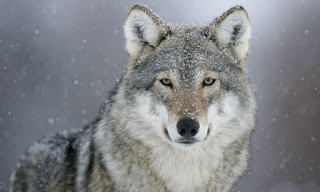
Colorado grey wolf, credit UK Guardian

His administration has so far backed the de-listing of the gray wolf from the federal Endangered Species Act, which exposes them to hysterical persecution by wolf haters in a few western states. Federal wildlife officials are concerned that new hunting rules passed by states in the northern Great Lakes and Rockies pose a threat to the species full recovery. Wolf numbers are increasing, but are nowhere near their historic levels or existing habitat capacity. The new rules reflect the traditional wolf hatred of European colonizers' concerned for their livestock despite reimbursement programs for incidental wolf predation. States took over wolf management last decade in the Northern Rockies and in January for the remainder of the Lower 48 states.

In Montana, legislation to allow wolf hunting a night and substantial payments reminiscent of bounties that led to the wolf's extermination are advancing. Idaho legislation would allow hunters to kill wolves from the air without limits and the use of dogs. Wisconsin wolf haters killed twice as many wolves as the state wildlife authorities planned. Hunters and trappers killed at least 216 wolves of Wisconsin’s 1,100 wolves over three days, and forced an early shutdown of the season. Attorneys representing the Biden administration asked a California federal court to reject the petition of wildlife advocates to reinstate federal wolf protections last week, apparently signaling the administrations conclusion to allow the Trump era delisting to stand.

What is different from the 1800's eradication effort is that wolf killing has become politicized, a symbol of rebellion against perceived government overreach. The group behind the Wisconsin lawsuit that accelerated the opening of wolf killing in Wisconsin, Hunting Nation, has close links to Republican political circles including influential donors the Koch brothers, and other notable Trump supporters. The resumption of aggressive persecution of the wolf has become a way of expressing political outrage among right-wing extremists and gun owners. “It’s not a scientific approach to wildlife management. It’s management based on vengeance,” said Dan Vermillion, former chairman of Montana’s fish and wildlife commission. Hunting Nation leader, Luke Hilgemann, formerly served as CEO at Americans for Prosperity, a conservative advocacy group backed by industrialists Charles Koch and his deceased brother, David, that has spent tens of millions of dollars on Republican candidates. Former federal wildlife agent Carter Niemeyer, who killed wolves that preyed on cattle in the Northern Rockies and was later involved in restoration efforts, said wolves are too resilient to be easily eradicated. “They’re running them down with hound dogs,” he said. “ That’s wolf killing. That’s not wolf trapping or wolf hunting.” Delusional behavior dies hard.

Friday, September 17, 2021

'Toontime: Deranged


credit: M. Lukovich; BC Idonwanna sez:
Don't play with button, Lil' Don!

US Person is not the only person that thinks Herr Trumpillini is suffering a severe personality disorder. So does his niece who boasts a graduate degree in psychology. Then there is the former Speaker of the House, Paul Ryan. Ryan actually consulted a doctor on how to deal with someone classified as a malignant narcissist. According to the new book, Peril by Woodward and Costa, a wealthy doctor and a Republican donor, told Ryan that he needed "to understand what narcissistic personality disorder is," and sent him resources on the subject. Chief of Staff Milley offerred to warn his Chinese counterpart if the deranged occupant tried to start a war to stay in office. When Vice President Pense refused to participate in the coup d'etat on January 6th, Trump reportedly whinned, "You don't understand, Mike, you can do this. I don't want to be your friend anymore if you don't do this." Former VP Dan Quale advised Pense that he had no descretion in the ministerial Electoral College vote certification. Pense told Quale that "others in the White House" were telling him he did. Obvviously, congressional investigators will want to know the names of those co-conspirators. Even though there seems to be a consensus diagnosis of the former guy, a neurotic personality disorder is a long way from the legal definition of insanity that would excuse him from responsibility for his crimes including conspirarcy to overthrow the lawfully elected government of the United States of America..

Exhibit "A"

Wednesday, September 15, 2021

1428 Dolphins Killed in Single Day

In an orge of bloodletting a pod of Atlantic white-sided dolphins where herded into a shallow fiord in the Faroe Islands and massacred on the beach, turning the sea water red with their blood. This hunt known as the Grindadrap has gone on for hundreds of years in the remote Faroe Islands, a territory administred by Denmark. Natives defend the practice saying the hunt is a sustainable way of obtaining food and is part of their cultural identity. The number of dolphins killed in the slaughter on Sunday was unusually high exceeding the 1200 killed in 1940. Even the chairman of the Faroese Whalers Association, Olavur Sjurdarberg, called the excessive number of animals killed "a big mistake". "When the pod was found, they estimated it to be only 200 dolphins", he explained. "Somebody should have known better,"He added,. "Most people are in shock about what happened."

These hunts are regulated. Participants must first obtain a training certificate showing they know how to dispatch a large sea mammal. Killing involves severing the spinal cord with a lance. They are non-commercial and organized at the community level, often spontaneously when a pod is spotted. Meat is distributed to community members. A local MP visited the Faroes after the slaughter and told reporters that the hunts are legal, but not popular. He said, "People were furious," but defended the hunt as humane. Sea Shepard, an activist group dedicated to defending whales, disagrees saying,"the killing of the dolphins and pilot whales is rarely as quick as Faroese government makes out." Grindadrap hunts can turn into drawn-out, often disorganized massacres. The pilot whales and dolphins can be killed over long periods in front of their relatives while beached on sand, rocks or just struggling in shallow water." Surveys show that just over 50% of Faroe residents oppose dolphin hunting, but support the hunting of pilot whales. About 600 pilot whales are killed every year.

Tuesday, September 14, 2021

COTW: Correlation, Not Causation?

This chart shows what you have suspected all along: vaccination has become overtly political. What should be a science based public health decision is now being cynically manipulated by a desperate extremist faction for political advantage:
credit: Charles Gaba

Granted this chart shows only shows a strong correlation between the number of Trump voters by county to the death rate per hundred thousand residents, but it is so strong that political delusion cannot be ignored as a cause of high death rates in red areas of the country.The five states with the highest per capita death rate are all southern red states. Got Shots?

US COVID-19 DEATHS (est.): 921,000


Monday, September 13, 2021

A Scurry of Squirrels

Squirrels come to our attention this time of year, as they scamper about the yard gathering their winter stores. Often we think of them as manic, even slightly human-like in their behaviors. Could we be incorrectly ascribing human traits to a lowly rodent? Anyone who has watched a scurry of tree squirrels take nuts from a feeding table realize they are sociable, bold, athletic and occasionally aggressive. The University of California, Davis says perhaps NOT. Animal behaviorists have studied the golden mantle squirrel, Callospermophilus lateralis, which is a ground squirrel common to the western United States. Their study, published in the journal, Animal Behavior, claims to be the first to document personality in this squirrel species. Personality is defined as consistent behaviors over time. Behaviorist consider the golden mantle squirrel to be "asocial". They are relatively small, giving them little opportunity to form the tighter social bonds common in larger ground and tree squirrels, which typically spend more time in family units while reaching maturity. [photo credit: R. Loznak]

According to the data collected over three years, squirrels with more extrovert personalities covered more ground, collected more resources, and assumed the best perches for surveying their surroundings for food and predators compared to their shy, introverted counterparts. Makes sense right? As in humans, social skills contribute to an individual's well-being. Studying personality in animals is in its infancy, but there is a growing number of studies on individuality of squirrels. There is also a growing awareness that personality in animals have ecological consequences. Bolder animals may collect more food, but their consistent behavior exposes them to more risks. Personality could be a useful indicator of whether a species or an individual can adapt successfully to human induced changes in their habitat.